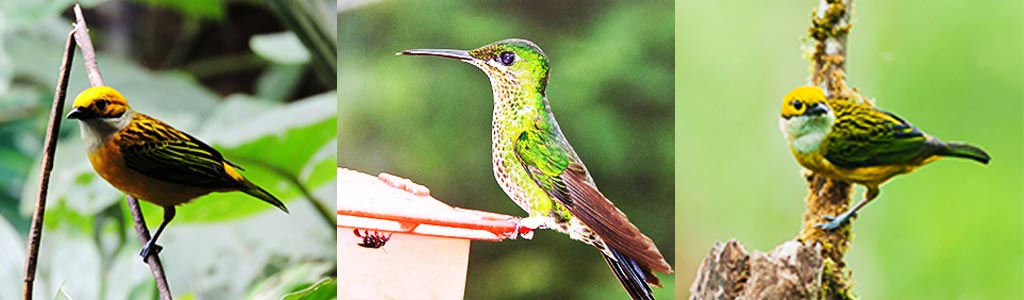
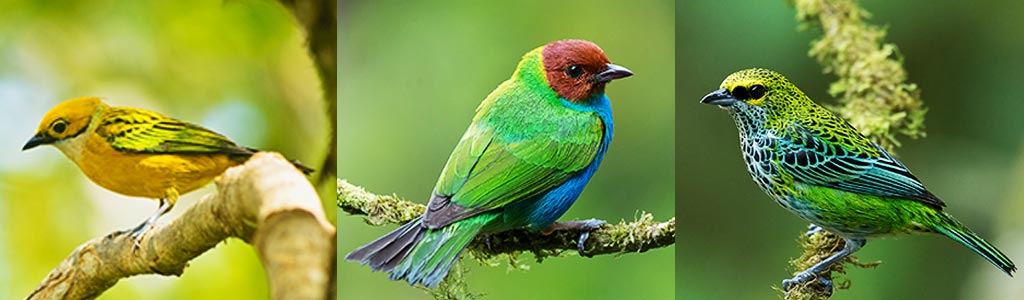
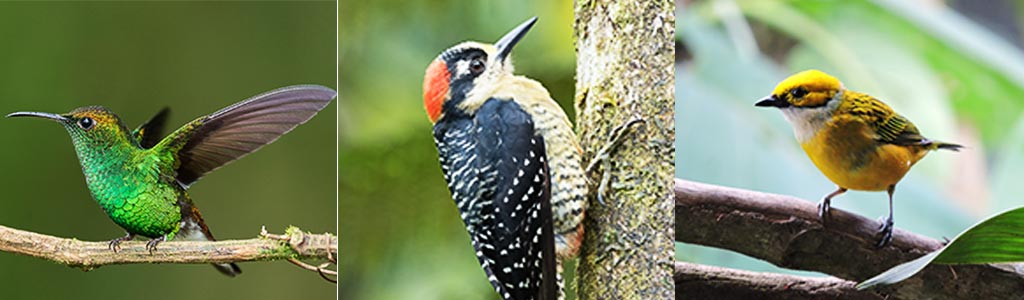
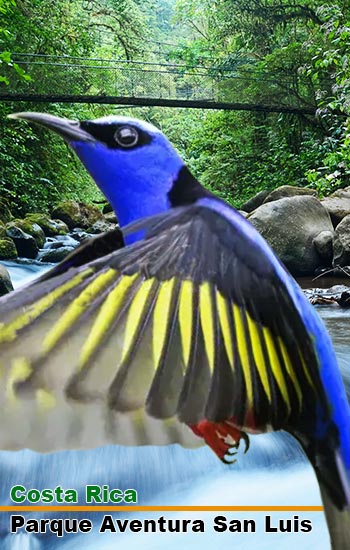
Its nest is a more or less globular mass, with a thickness of about 30 cm. and is made up of decaying leaves, sticks, and green moss. They lay 2 eggs pink with scattered brown and gray spots and splashes. They reproduce from march to june.
It is a resident species whose numbers are decreasing. It is located mainly on the slopes of the mountains and the surrounding lowlands, between 100 and 1200 m .. Sometimes it reaches up to 1500 m. They are found from southern Mexico to northwestern Peru and the Brazilian Amazon.
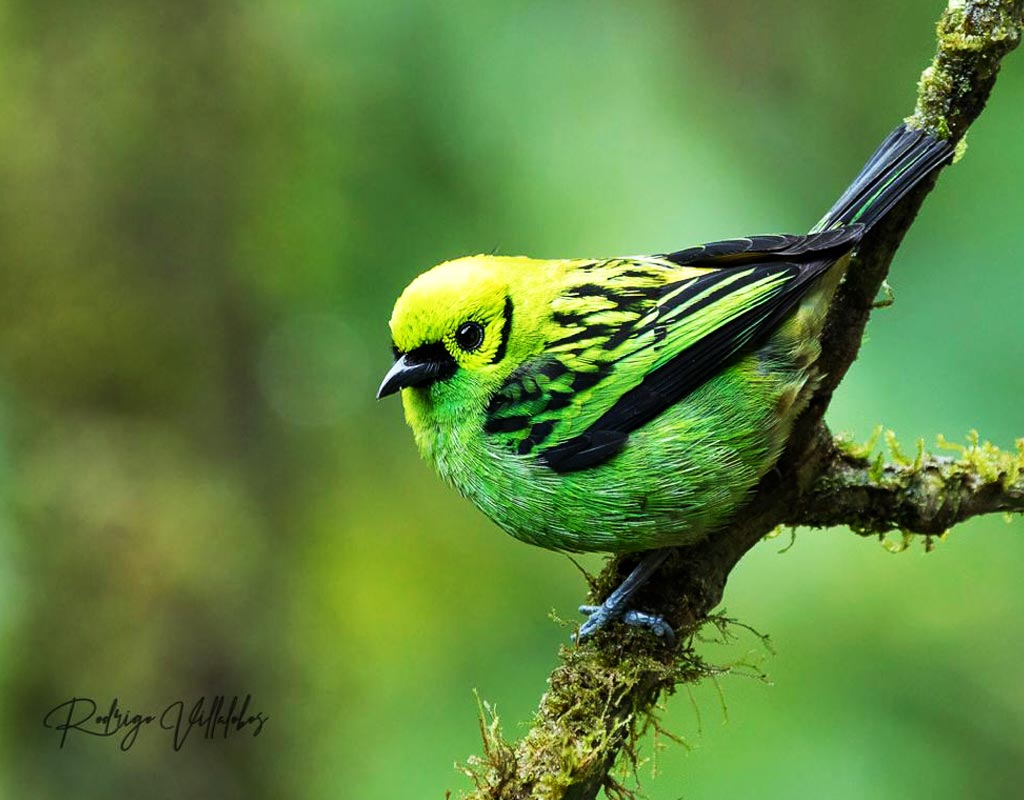
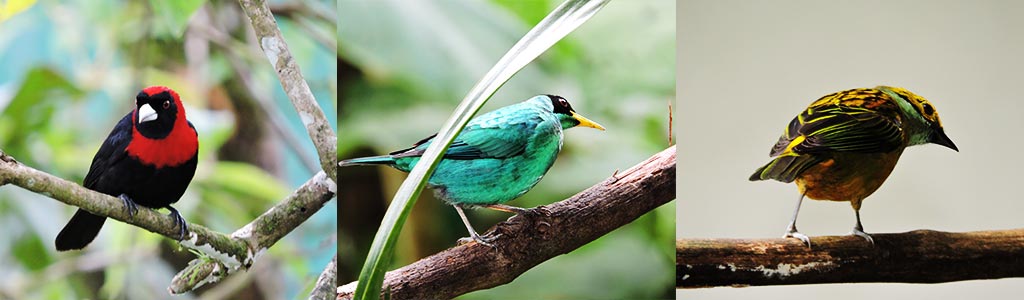
Emerald or black, measures 12 cm. and weighs 19 grams. It is pale green with a striped back and black on the wings, with square tail and ear spot. It is a resident species, They are found in Costa Rica and up to the west of Ecuador.
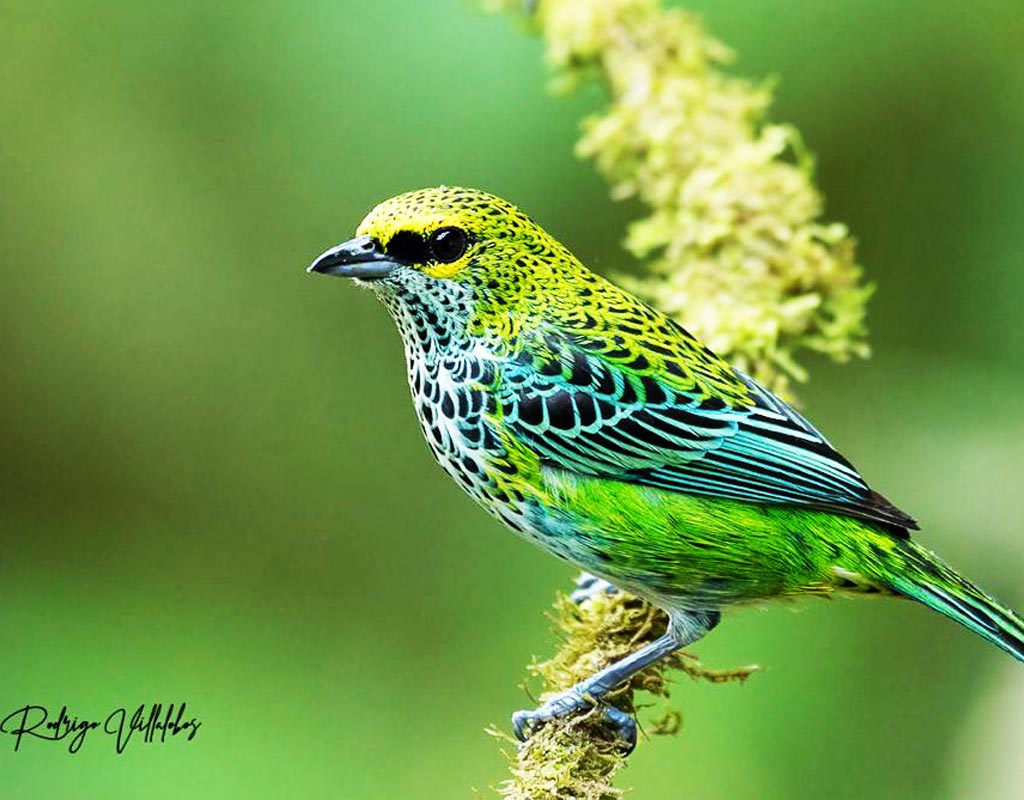
Is a rare to relatively common resident species in the foothills, between 400 and 1000 m. high on the Caribbean side, from the Cordillera de Tilarán to the south. In the Pacific it is located between 300 and 1400 m. On both slopes they are located somewhat higher near the border with Panama. It feeds on berries, arylated seeds and other fruits. measures 13 cm. and weighs 20 grams. No other it has black stippling above and below. They are found from Costa Rica to Trinidad, southeastern Colombia, and northern Brazil.
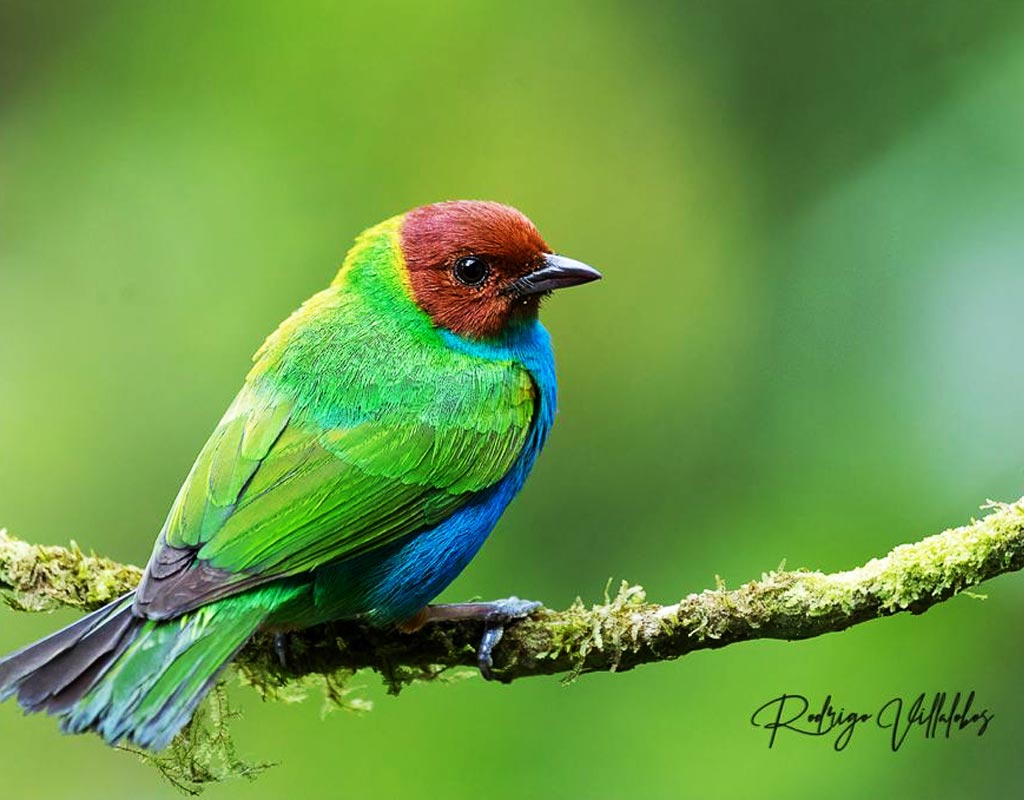
It is a common resident species in the humid foothills of the Caribbean side, between 600 and 1500 m. Tall. They form pairs or family groups throughout the year, and often accompany mixed flocks of tanagers, honeysuckle, and other small birds. They are found from Costa Rica to western Ecuador, northern Bolivia, and eastern Brazil.
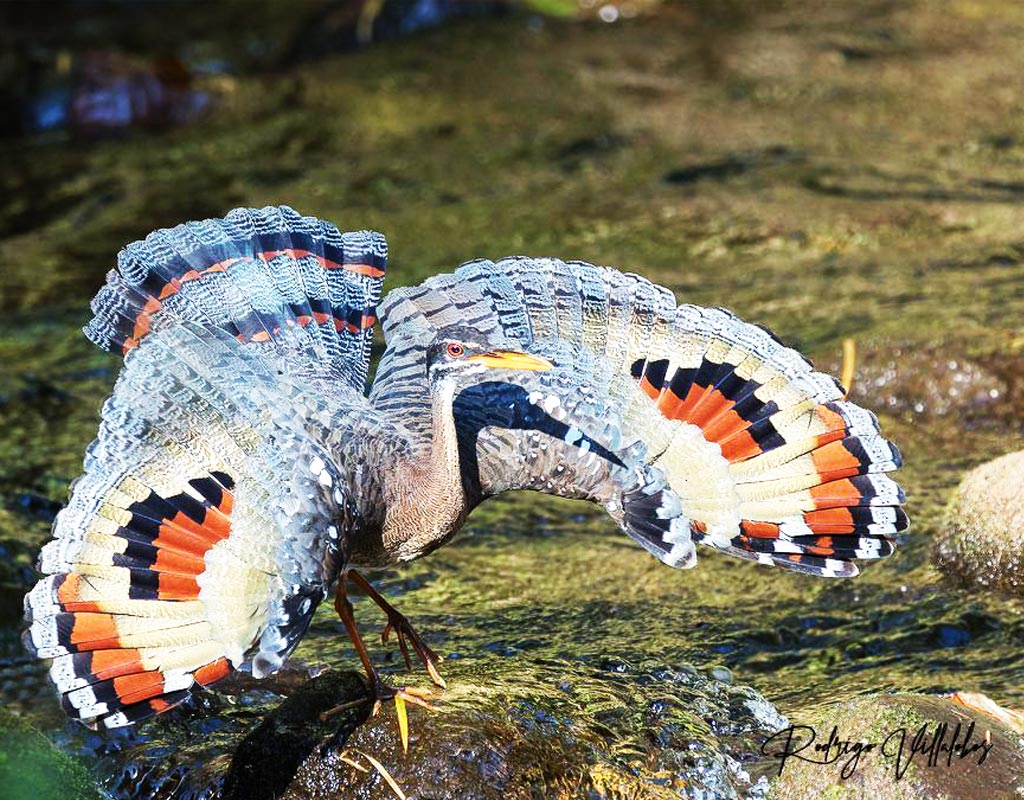
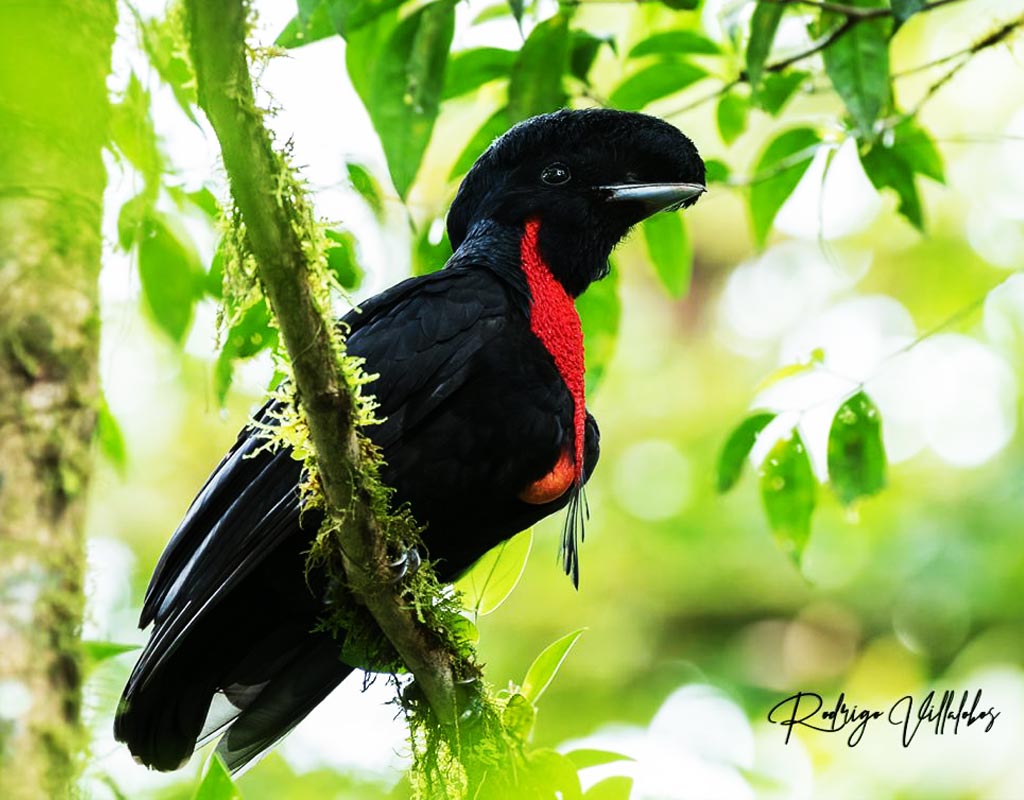
Is a rare and local species. It spends most of the year in the foothills of the Caribbean and the surrounding lowlands (to the north it extends at least to the Miravalles Volcano). Females are mainly kept below 200 m. and males between 100 and 500 m. They migrate towards the middle and high elevations to nest locally between 800 and 2000 m.
Males shows up by inflating their chest between March and May or June, probably their breeding season. It is found in Costa Rica and western Panama.
Costa Rica is a premier global destination for bird observation, housing over 930 recorded species.
This immense biodiversity is fueled by its 12 distinct life zones, ranging from sun-drenched dry forests to misty high-altitude cloud forests.
Acting as a “biological bridge” between North and South America, the country offers the rare opportunity to see migratory species from the north alongside exotic tropical endemics, making it possible to spot over 100 different species in a single day.
For the ultimate birding experience, Parque de Aventura San Luis stands out as the best spot due to its strategic location. Situated between San Ramón and the Arenal Volcano region, this middle-elevation forest provides a unique microclimate that attracts rare birds often missed in other popular parks.
Its accessibility is a major advantage for observers; located just over an hour from the main international airport, it allows birders to step directly from their vehicles into a high-quality primary forest habitat.
Beyond these “mega” rarities, San Luis is a sanctuary for vibrant canopy dwellers, offering some of the best photography opportunities in the country for the endemic Blue-and-gold Tanager and the Emerald Tanager. With its well-maintained hanging bridges and specialized feeding stations, the park provides an intimate, eye-level view of Costa Rica’s avian wonders that is truly unmatched.
On our tours you can enjoy the grandeur of nature in Costa Rica is the perfect tour for the whole family, enjoy the most beautiful orchids of Costa Rica, Birding, various types of animals such as howler monkeys, coatis and more species that you can enjoy throughout the journey.